


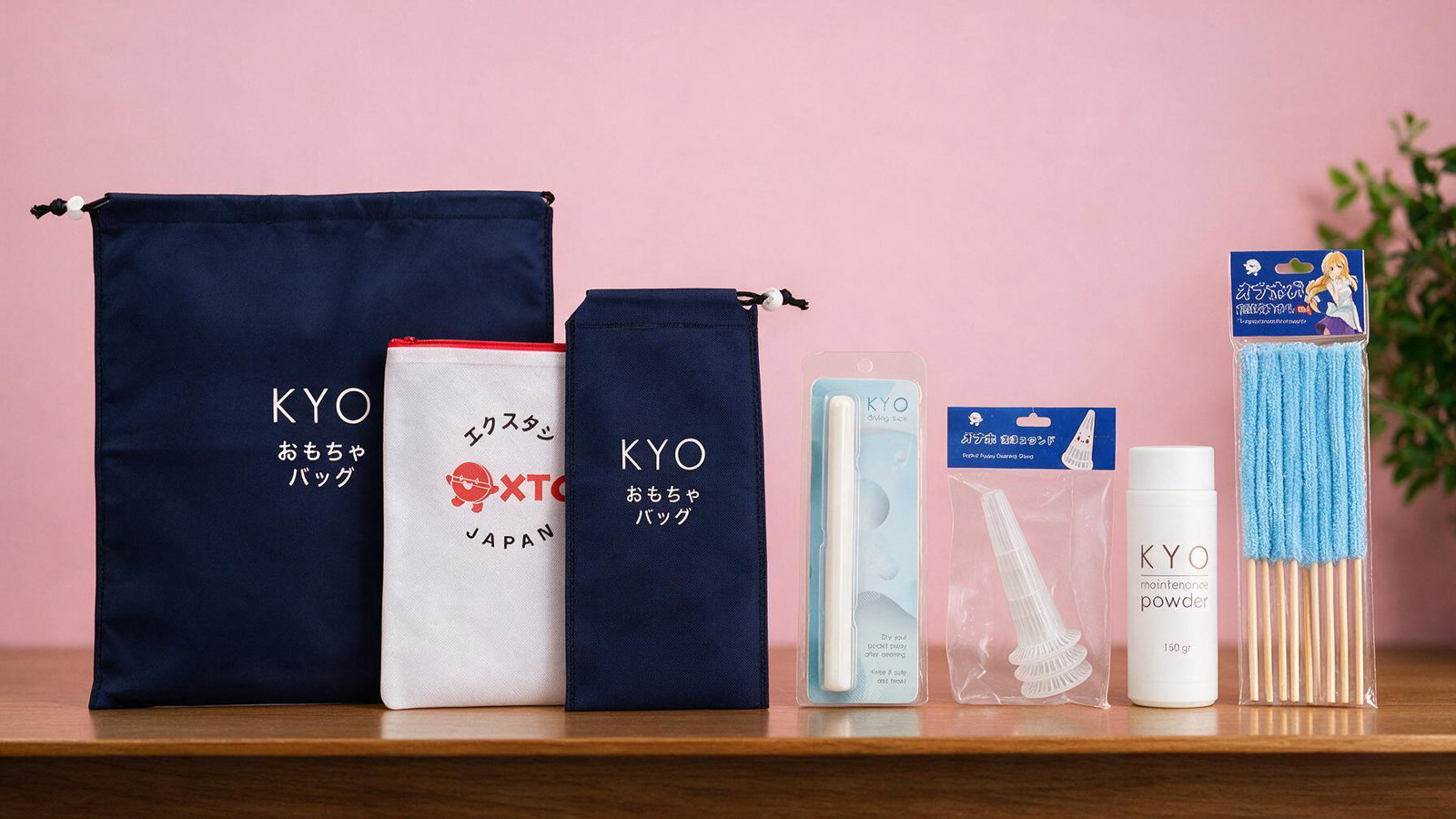
You know the Gordon Ramsay clip. Chef cuts into the chicken, it's pink in the middle, and the whole kitchen gets the "IT'S RAW" treatment. Now picture the inside of your onahole eight hours after you "let it air dry." Same energy. The outside looks fine. The tunnel is still damp. And damp is where every bad thing that can happen to a sleeve actually starts.
Every care guide on the internet handles drying in one sentence: "let it air dry completely." That's a recipe that says "cook until done." So this post does the thing nobody else bothers with. It treats drying as the actual failure point, and walks you through a real setup you can build tonight: a drip zone, an airflow zone, and a powdered storage zone. Total cost, about the price of a takeaway.
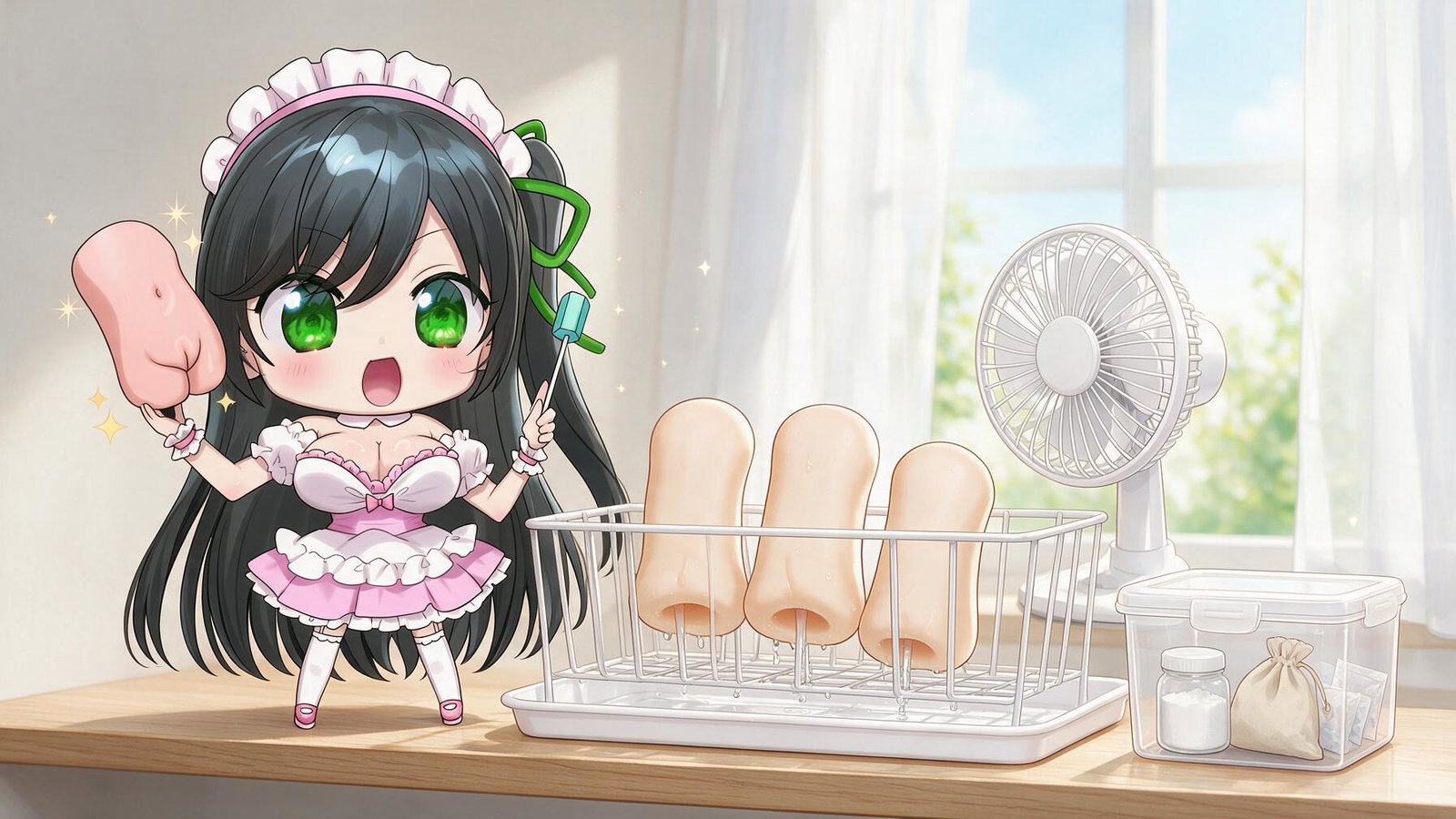
Why "Just Air Dry It" Is Where Sleeves Go to Die
Washing is the easy part. Warm water, a little cleaner, rinse, done. Then you leave the sleeve on a towel, close the drawer the next morning, and assume physics finished the job. It didn't.
Here's what's actually going on inside the tunnel of a damp onahole:
- Mould gets a head start. A closed, dark, damp tube at room temperature is a petri dish. Those dark specks people post on Reddit asking "is this normal?" are not normal. They're the result of a sleeve that was stored at 90 percent dry, over and over.
- The smell sets in. That sour, plasticky funk isn't the TPE. It's bacteria that moved into moisture you left behind.
- The surface goes tacky. Moisture plus the natural oil bleed of TPE equals a sticky, dust-magnet surface. Powder on top of that makes paste, not protection.
- Thick walls hide it. A 200 gram cup can dry by lunch. A 1.5 kilo dual-layer hole can be dry to the touch outside and still wet three centimetres in. That's where "I dried it, I swear" comes from.
The fix isn't more scrubbing. It's air. Moving air, hitting the inside of the tunnel, for long enough. Which is what the three zones are for.
The Three-Zone Setup (Total Budget: About 40 Euro)
Think of it like a tiny assembly line. Each zone does one job, and the sleeve moves down the line as it goes from soaking wet to bone dry to stored.
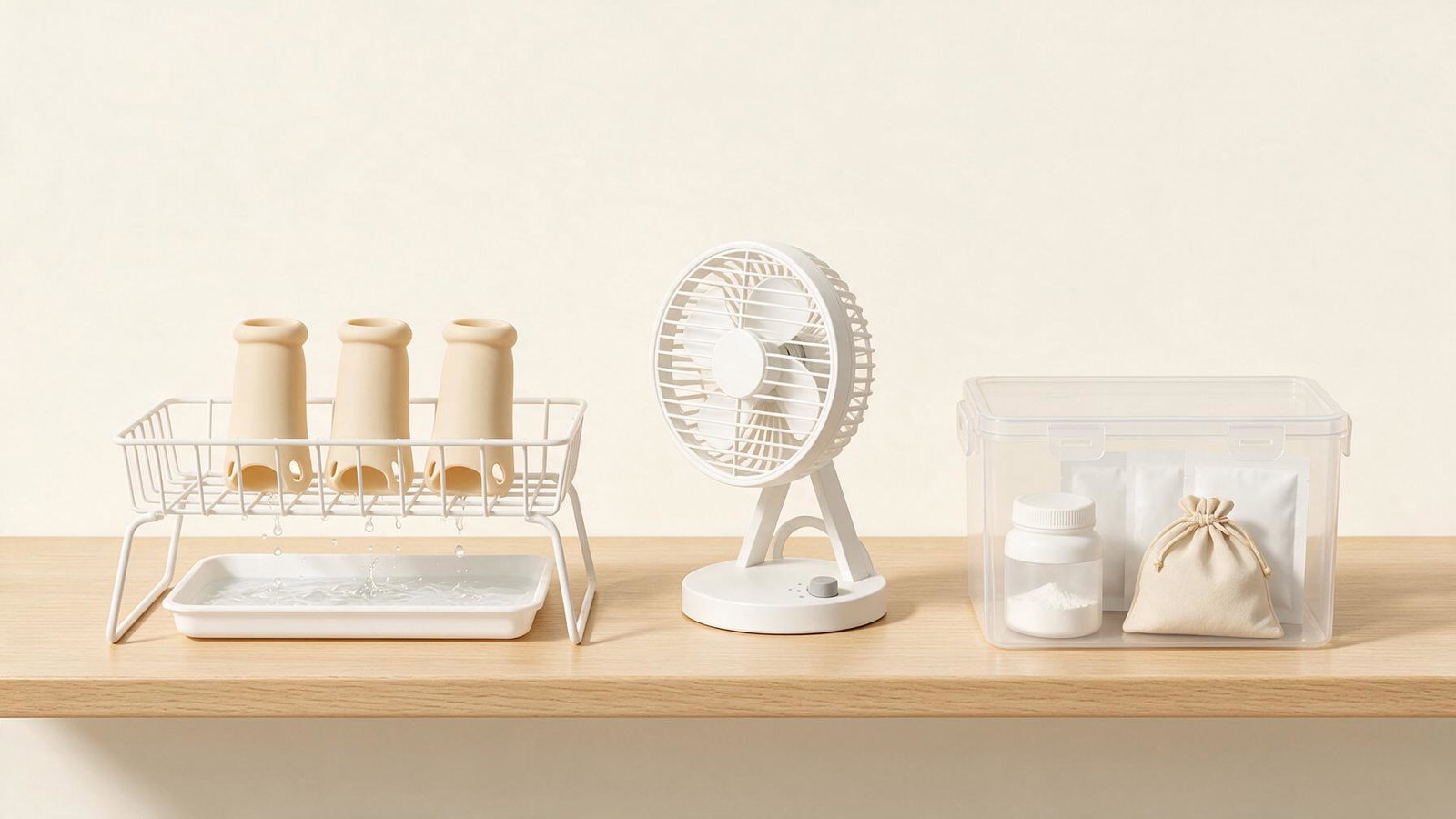
Left to right: drip zone, airflow zone, storage zone. Your bathroom shelf is now a factory.
Zone 1: The Drip Zone (First 20 to 30 Minutes)
Straight out of the sink. The goal here is to get the bulk water out fast, before it has time to soak deeper into the material.
- Squeeze, don't wring. Gently press the sleeve from the closed end toward the opening, like squeezing the last of the toothpaste. Wringing tears the tunnel on thinner sleeves.
- Pat the outside with a microfibre cloth. Not a bath towel. Cotton towels shed lint that sticks to TPE like glitter at a kids' party.
- Stand it upright, opening facing down. This is the single most underrated move in sleeve care, and we'll get to why in a second.
What to stand it on: a cheap plastic dish rack from any homeware shop works great and holds three or four sleeves at once. For something purpose-built, the XTC Onahole Cleaning Stand (7.95 euro) holds one sleeve upright with air on all sides and fits on a bathroom shelf without looking like a science project.
Why upright beats flat, every time
Lay a sleeve on its side and gravity pools water at the lowest point of the tunnel, where it sits against material that's touching the towel. No airflow, no evaporation, a puddle in a tube. Stand it up with the opening down and gravity does the work for you: water drains out, air moves up through the tunnel, and the whole inner surface is exposed. Bonus: it stops heavy sleeves from slowly flattening into a pancake shape while they sit.
Zone 2: The Airflow Zone (The Part Everyone Skips)
Here's the honest truth about "air drying": still air barely does anything. Evaporation needs the humid air inside the tunnel to be replaced with dry air, and a closed room doesn't do that on its own. So you replace it.
- A small USB desk fan. 10 to 15 euro anywhere. Point it at the rack from about 30 centimetres away, on low. That's it. This one change cuts drying time roughly in half for most sleeves, and it's the difference between "dry by tonight" and "dry by tomorrow, maybe."
- A drying stick in the tunnel. The KYO Onahole Quick Drying Stick (9.95 euro) is a reusable absorbent core you slide in after the drip zone. It pulls moisture out of the deep inner texture the fan can't reach. Prefer disposable? The XTC Microfiber Drying Sticks 8-pack (9.95 euro) does the same job and you bin them when they're done.
- No heat. None. No hair dryer, no radiator, no sunny windowsill. TPE starts softening and warping above roughly 40°C, and UV light makes it brittle. A warm room is fine. A hot anything is not.
Realistic dry times, by material and wall thickness. These aren't lab numbers, they're what you should expect in a normal room at around 21°C with a fan running versus not:
| Sleeve type | Typical weight | With fan + stick | Still air only |
|---|---|---|---|
| Thin-wall cup or mini sleeve (TPE) | Under 300 g | 1 to 2 hours | 4 to 6 hours |
| Standard single-layer sleeve (TPE) | 500 g to 1 kg | 3 to 4 hours | Overnight |
| Thick or dual-layer sleeve (TPE) | 1 to 2 kg | 6 to 8 hours | 24 hours or more |
| Onahip or torso (TPE) | 3 kg and up | 12 to 24 hours | 2 to 3 days |
| Platinum silicone sleeve | Any | Roughly half the TPE time | Roughly half the TPE time |
Silicone doesn't absorb water the way TPE does, so it dries faster, but it still traps droplets in deep texture. The stick matters there too.
Zone 3: The Powdered Storage Zone (Only Once It's Bone Dry)
This zone has one rule, and it's the rule people break most: nothing goes in here damp. Powder, bags, and boxes all lock in whatever moisture is present when you seal them. Dry sleeve, they protect it for months. Damp sleeve, you've built a humidity chamber.
When powder helps: a fully dry TPE sleeve gets tacky over a few days as its oils rise to the surface. A light dusting of KYO Maintenance Powder (15.49 euro) absorbs that oil and brings back the soft, dry, skin-like feel. Inside and out, then shake off the excess.
When powder hurts: apply it to a sleeve that's even slightly damp and it clumps into a paste that seals moisture against the material. That's the "why does my sleeve smell like a wet cellar" scenario. If you're not sure it's dry, give it another hour in the airflow zone. Powder can wait. Mould doesn't.
Then, the actual storage:
- A breathable bag. The KYO Toy Sack Small (6.95 euro) or the KYO Toy Sack Big (7.45 euro) for the heavier stuff. The XTC Japan Toy Sack (5.95 euro) is the same idea with a drawstring. Cloth, not plastic. Plastic sweats.
- Silica gel packets in the bag or box. The little "do not eat" sachets from every shoebox and electronics box you've ever opened. Two or three per bag. They soak up ambient humidity so your sleeve doesn't. Swap them every couple of months, or dry them out in a low oven and reuse.
- Sleeves never touch each other. TPE on TPE will slowly fuse over weeks. One sleeve per bag, always.
- Dark, cool, dry. A drawer or a wardrobe shelf. Not the bathroom (humidity), not the windowsill (UV), not the car (both, plus heat).
The Two-Sleeve Rotation (Buying Yourself a Full Day)
Here's the trick that makes all of the above feel effortless instead of like a chore: own two sleeves.
Not for variety, although sure, that too. For time. Sleeve A is in the airflow zone doing its 8 hours. Sleeve B is dry, powdered, and ready. You never have to choose between "use it damp" and "wait until tomorrow," which is the exact moment most people give up on proper drying. Two mid-weight sleeves cost about the same as one premium one, and they'll both outlast a single sleeve that gets rushed back into service every time.
If you only own one, the rotation still works with a smaller, faster-drying cup as the backup. It dries in an hour or two and covers the gap.
Your Shopping List
| Zone | Item | Where |
|---|---|---|
| Drip | Dish rack or cleaning stand, microfibre cloth | Any homeware shop, or the XTC Cleaning Stand above |
| Airflow | Small USB fan, drying stick | Fan from any shop, stick from our onahole cleaning range |
| Storage | Maintenance powder, cloth bag, silica gel | Our renewing powder and sex toy storage ranges, silica from your last shoebox |
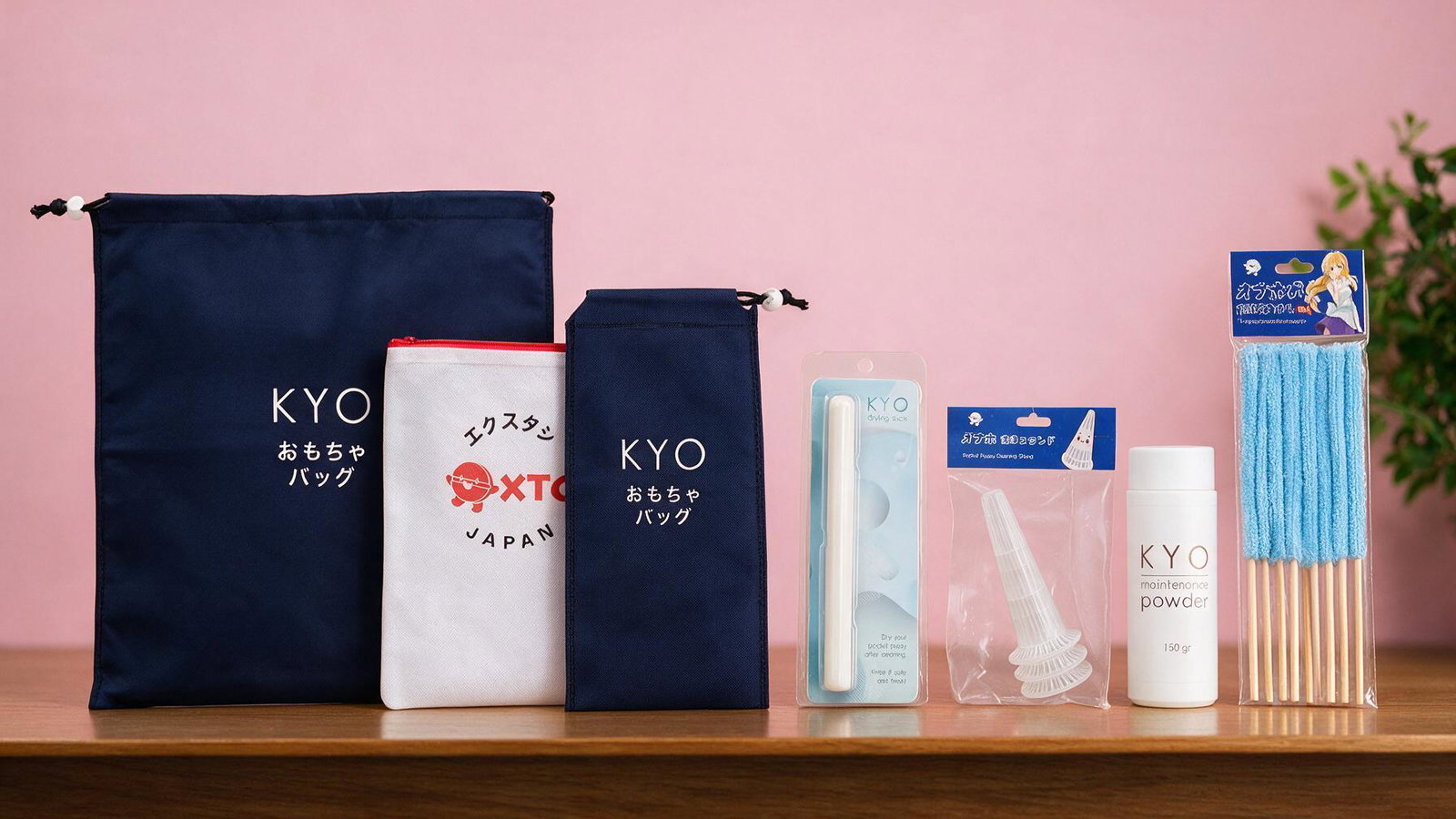
Everything from the shopping list in one shot. Products shown for illustrative purposes only: the sizes and proportions in this image may not be accurate compared to the actual products, check each product page for real dimensions.
FAQ
Can I speed it up with a hair dryer on cool?+
On the cool setting, technically yes, it's just a loud fan. The problem is the cool setting on most hair dryers still blows warm, and the moment someone gets impatient and flips it to low heat, the sleeve is done. A 12 euro desk fan does the same job with zero risk and you can walk away from it.
How do I know it's actually dry inside?+
Pull the drying stick out and look at it. Damp stick, damp sleeve. Then stick a clean finger in as far as it goes: dry TPE feels slightly grippy and matte, damp TPE feels cool and slick. When in doubt, another hour in front of the fan costs you nothing.
Is it bad to leave it in front of the fan overnight?+
No. Room-temperature airflow doesn't hurt TPE or silicone. Leaving a thick sleeve in front of a fan for 10 hours is exactly what you should be doing with it.
Powder before storage or before use?+
Before storage, on a fully dry sleeve. That's what keeps it from going tacky in the bag. Before use, you're just going to rinse it off anyway. Any excess powder washes out in seconds with warm water.
Does any of this apply to silicone sleeves?+
Zones 1 and 2, yes, just faster. Zone 3, mostly: silicone doesn't bleed oil so powder is optional, but a breathable bag and silica gel are still the right call, and heat is still the enemy.
Bottom Line
Cleaning gets the attention, but drying is where sleeves actually live or die. Stand it up, put a fan on it, give it a stick, and don't put anything away until it's bone dry. Three zones, one shelf, forty euro, and a sleeve that still feels new six months from now.
Want the full wash-to-store routine? Read The Ultimate Onahole Care Guide, then build your station from the onahole cleaning range.