


Your car has a warning light. Your phone has a battery health screen. Your onahole has... a smell, a strange sheen, and a vague feeling that something's not right. It's also September, which means a lot of toys just spent a muggy summer sealed in a drawer, and they've all got something to say at once.
Most cleaning guides start at step one: rinse, wash, dry. Handy if nothing's gone wrong yet. Useless if you're standing in the bathroom holding a sleeve that's gone sticky, wondering whether to Google it or bin it. So this guide runs the other way round. Start from the symptom, trace it back to the cause, and get a straight answer: fix it, live with it, or let it go.
How to Use This Guide
Find your symptom below. Each one gets the same four things: what it looks like, what actually caused it (spoiler: it's almost never the washing), the fix, and the honest point where the toy is finished. Nearly everything on this list comes down to two culprits, moisture and storage, and both are cheap to sort out. A couple of them can't be fixed at all, and knowing that early saves you scrubbing a sleeve that was never coming back.
One thing before we start: everything here is about TPE, the soft thermoplastic elastomer that nearly every onahole is made from. TPE is soft because it's loaded with plasticiser oils. Almost every symptom below is really a story about those oils going somewhere they shouldn't, or water staying somewhere it shouldn't.
Symptom 1: The Surface Is Sticky or Tacky
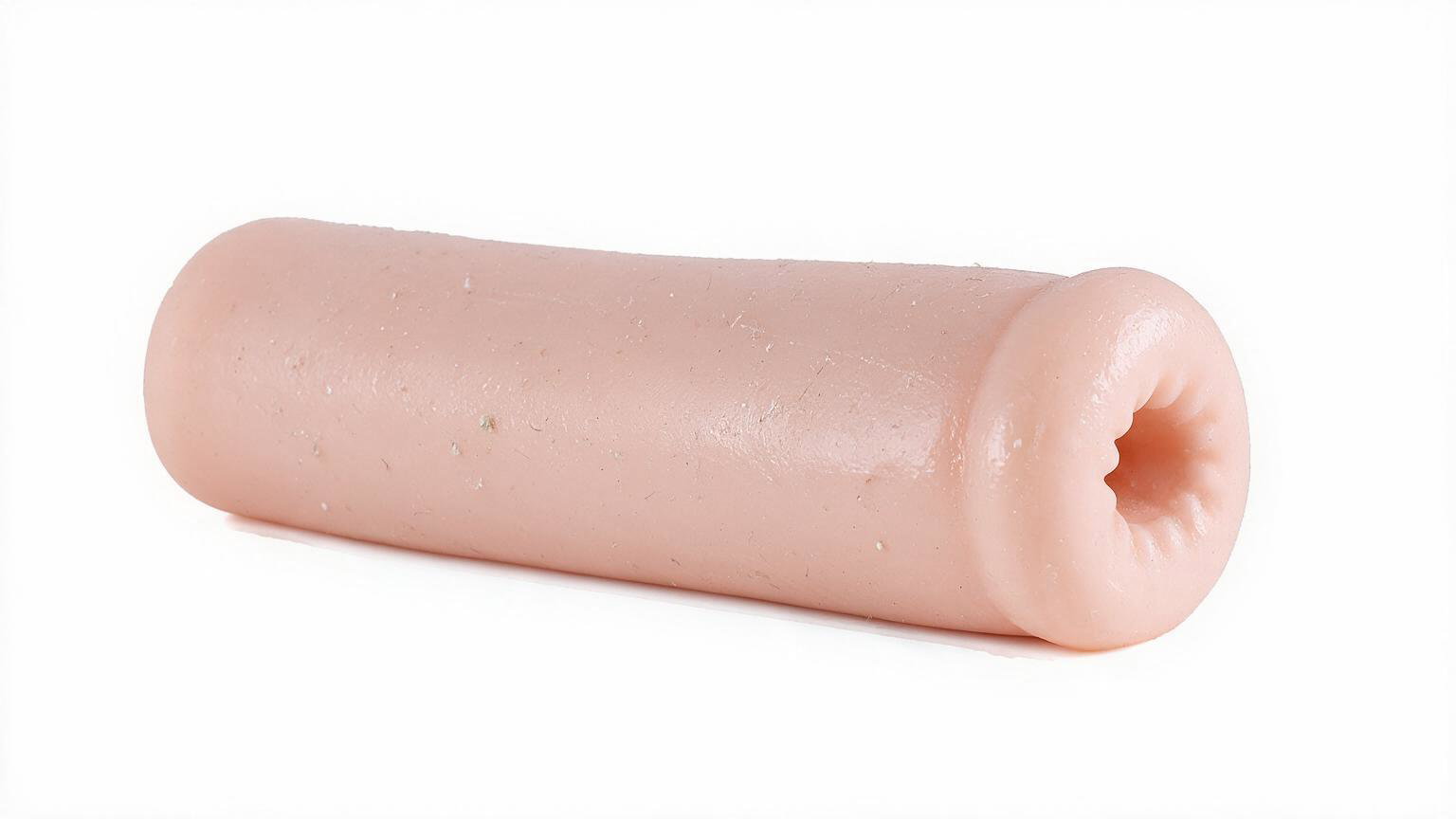
Example shown for illustration only.
What it looks like: The toy grabs your fingers, picks up dust and fluff like a lint roller, and feels faintly like a wine gum left on a car dashboard.
The cause: Plasticiser migration. The oils that make TPE soft slowly work their way to the surface. That's normal and happens to every sleeve. It becomes a problem when nothing's absorbing that oil (no powder), when heat speeds it up (a warm drawer, a radiator, a sunny windowsill), or when the toy's stored pressed against plastic or another toy, which pulls the oil out faster.
The fix: Wash with a gentle toy cleaner and lukewarm water, dry it completely (inside and out, this is the part everyone skips), then dust it generously with maintenance powder and rub it in. It should feel dry and velvety within a minute. Store it somewhere cool.
When it's done: If it goes sticky again within a day of powdering, or the surface has turned gummy enough to leave residue on your hand, the plasticiser has been leaching for a long time and the material has structurally changed. That doesn't reverse. Retire it.
Symptom 2: A White, Powdery Bloom
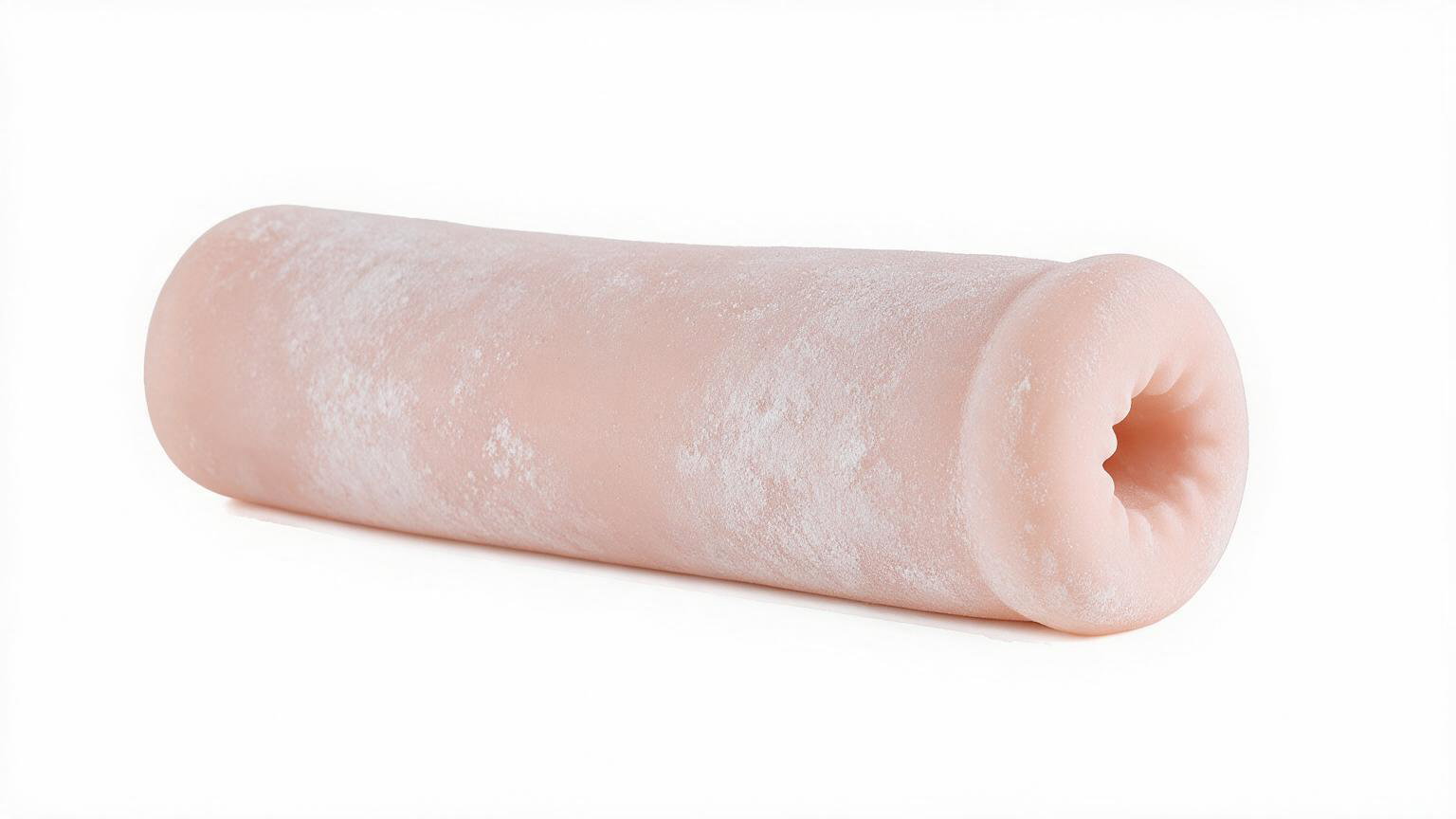
Example shown for illustration only.
What it looks like: Chalky white patches or a uniform pale haze across the surface, sometimes only on one side.
The cause: Three completely different things can look like this, so do the rinse test first. Rinse a patch under lukewarm water and rub it. If it disappears, it was leftover maintenance powder, dried lube, or limescale from hard tap water. Harmless. If it doesn't rinse off and the material underneath feels stiffer or more brittle than the rest of the toy, that's plasticiser loss: the oils have left and the surface is drying out. If the white spots are fuzzy, raised, or clustered in the tunnel, stop, that's mould, and it gets its own verdict below.
The fix: Residue: rinse, dry, re-powder, done. Plasticiser loss: wash, dry, powder generously, and keep it away from heat. The stiffness won't fully reverse, but powder will keep the surface usable. Mould: a full wash with a proper cleaner and a complete dry, then a hard look at whether you still trust it.
When it's done: Mould that's grown into the material (not just sitting on it) or comes back after one full clean-and-dry cycle. TPE is porous. Once it's in, it's in. Retire it.
Symptom 3: It Smells Sour, or Like Chemicals
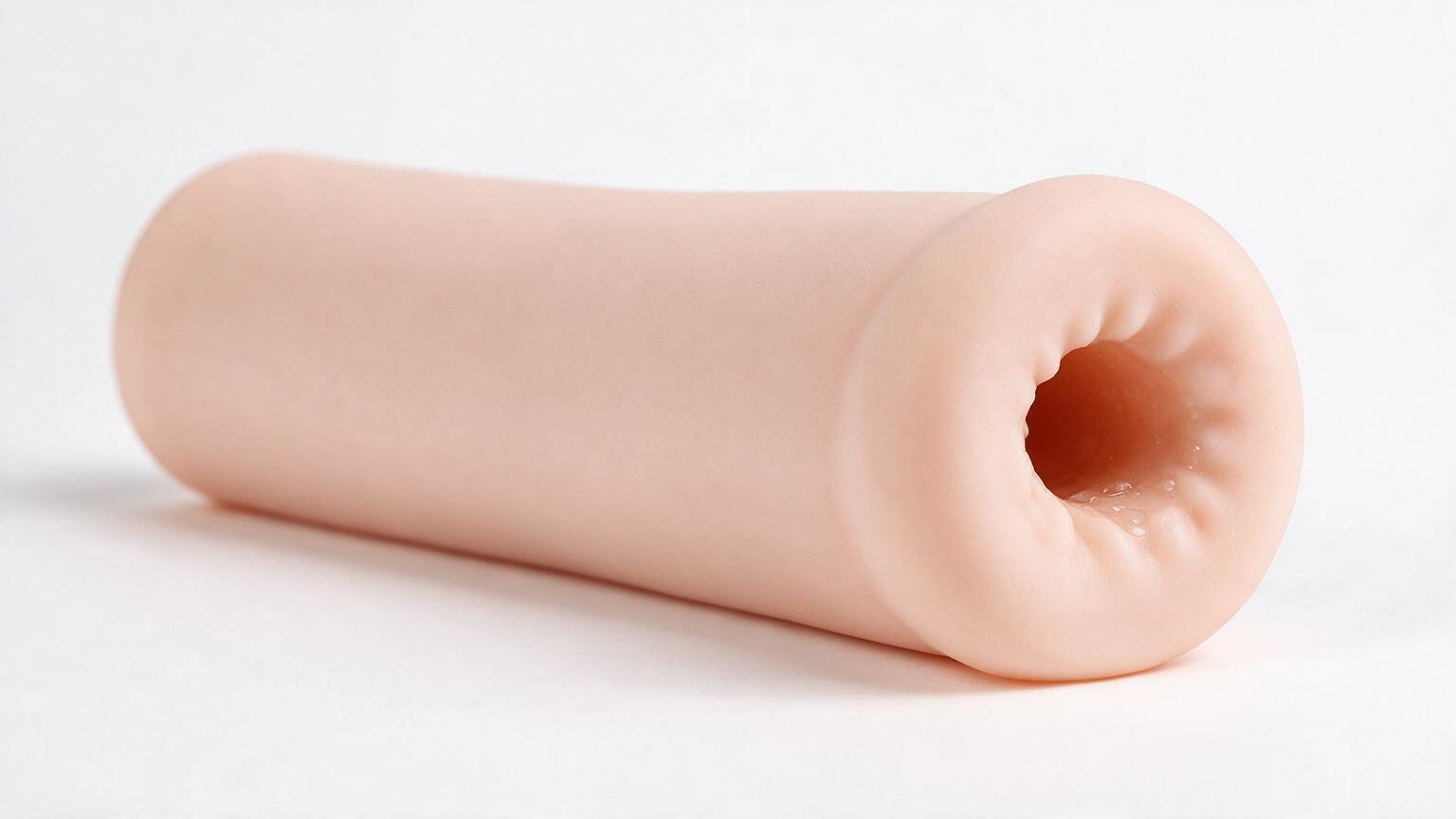
Example shown for illustration only.
What it looks like: Two very different smells, two very different problems. Sour, musty, or "gym bag" means bacteria. Sharp, plasticky, or chemical means the material itself.
The cause: The sour smell is water. Specifically, water that never fully left the tunnel. Closed-end sleeves are the usual suspects, because the deepest chamber stays wet long after the outside feels dry, and bacteria throw a party in there. The chemical smell is usually one of two things: a brand-new toy off-gassing (normal, fades within a week or two of airing), or an older toy that got hot enough for the plasticiser to break down (not normal, doesn't fade).
The fix: For sour: wash with a real foaming toy cleaner rather than a rinse, work it into the tunnel, rinse thoroughly, then dry it properly. A drying stick is the single best tool here, because it wicks moisture out of the deepest part of the tunnel where air can't reach. Powder, then store it in a breathable bag, not a sealed plastic box. For new-toy chemical smell: wash it, powder it, and let it breathe outside the box for a few days.
When it's done: A sour smell that survives two full clean-and-dry cycles, or any smell that turns up alongside dark spots inside the tunnel. And a chemical smell on an older toy that's also gone tacky means heat damage, which is permanent. Retire it.
Symptom 4: It's Gone Cloudy, Yellow, or Discoloured
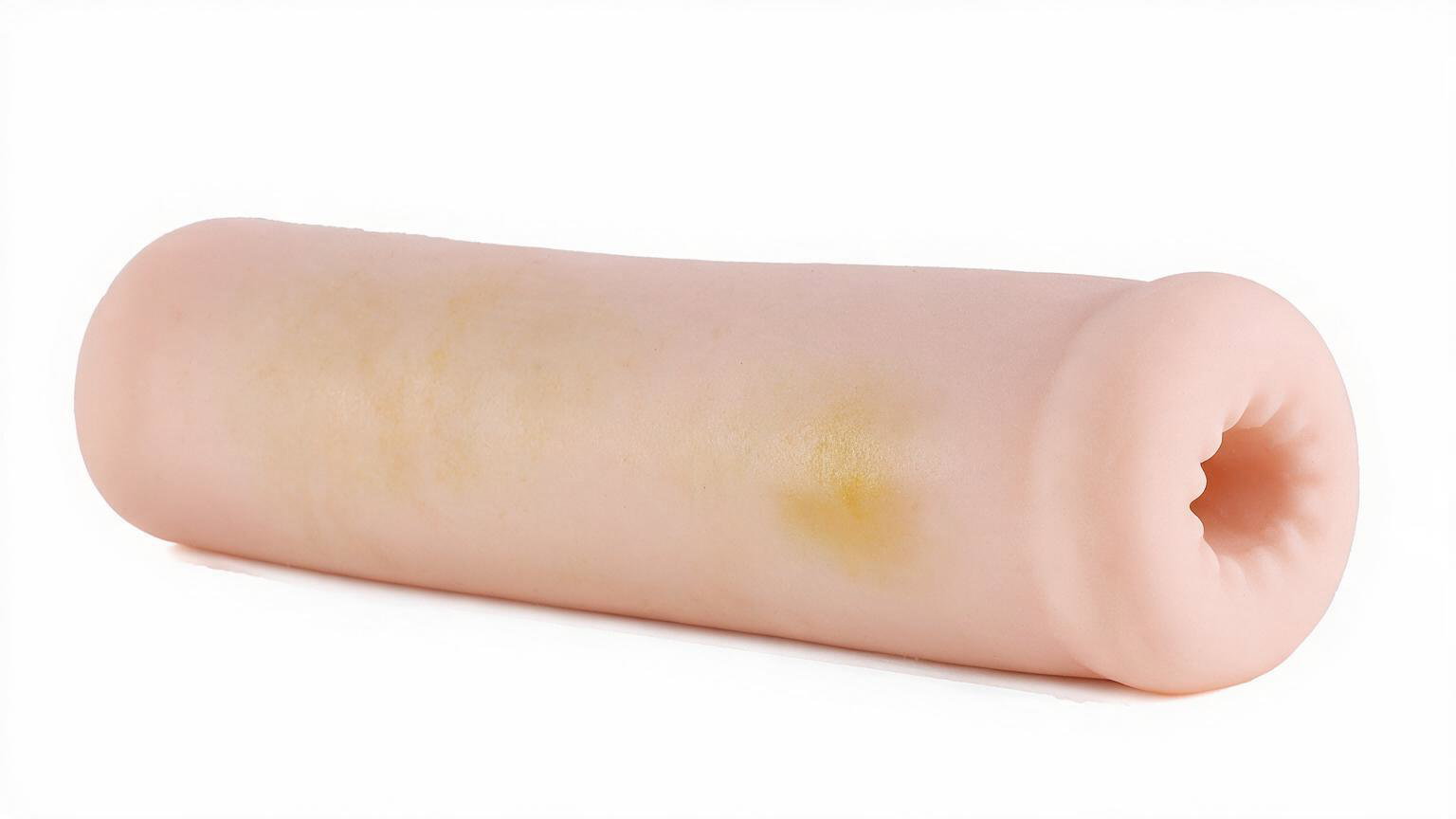
Example shown for illustration only.
What it looks like: A once-clear or pale toy has turned cloudy, yellowish, or greyish. Or, the fun version: it's picked up a mystery colour on one side.
The cause: Yellowing and clouding are oxidation and UV exposure, meaning the toy lived somewhere with daylight. A single-colour stain in one spot is dye transfer: TPE happily absorbs pigment from anything it sits against for long enough, including coloured fabric, another toy's box art, a dyed silicone toy, or a cheap plastic bag. Greyish smudges are usually just dust that stuck to a tacky surface (see Symptom 1).
The fix: Honestly, mostly cosmetic. Wash and powder it, and if the colour's on the surface it may fade slightly. Then move it: a dark drawer, wrapped in its own toy sack, away from anything coloured. Discolouration on its own doesn't change how the toy feels or how safe it is.
When it's done: Only when it turns up with company. Yellowing plus stiffness, or yellowing plus tackiness, means the material is ageing out, not just changing colour. On its own, keep using it.
Symptom 5: Torn Ridges Inside, or a Split at the Entrance
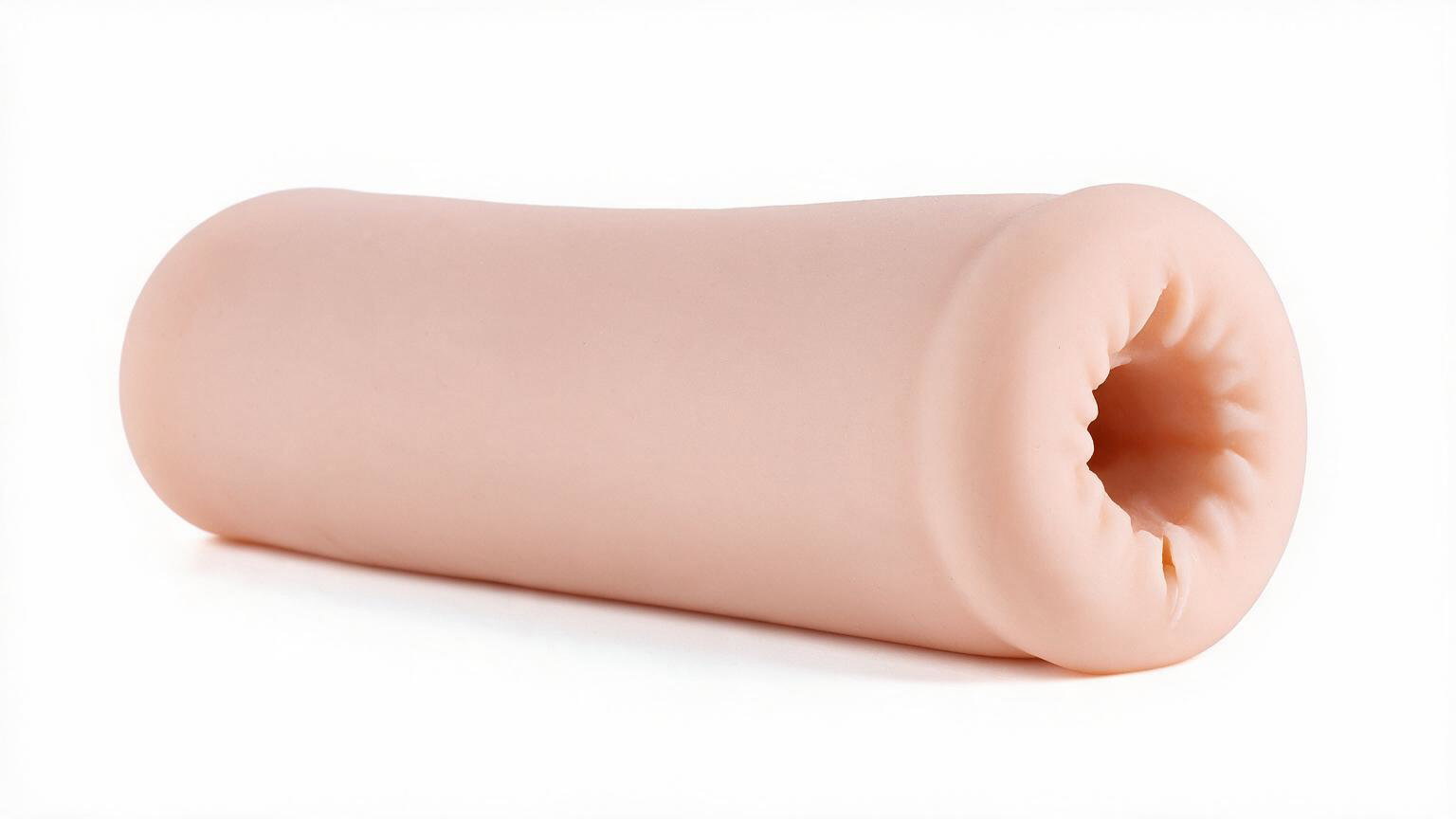
Example shown for illustration only.
What it looks like: You can feel a rip inside the tunnel, a texture ridge has come loose, or the entrance has a small split that gets a little longer every time you look at it.
The cause: Not enough lube is the number one cause, full stop. Dry friction on TPE is like dragging a fingernail across a marshmallow. Number two is the drying stick going in at a bad angle or with force. Number three is age: as plasticiser leaves the material, it gets less stretchy and starts tearing at the thinnest points, which are usually the internal ridges and the entrance.
The fix: There isn't a body-safe repair. Skip the glue, skip the heat gun, skip the YouTube tutorial. A small internal tear can be lived with, on one condition: you clean it seriously every time, because a tear is a pocket that traps moisture and bacteria. Use more lube than you think you need, and go slow with the drying stick.
When it's done: The tear reaches the outer wall, the entrance split grows past a fingertip's length, or a chunk of internal texture has actually come away. At that point it's a hygiene problem, not a comfort problem. Retire it.
Symptom 6: It's Weeping Oil
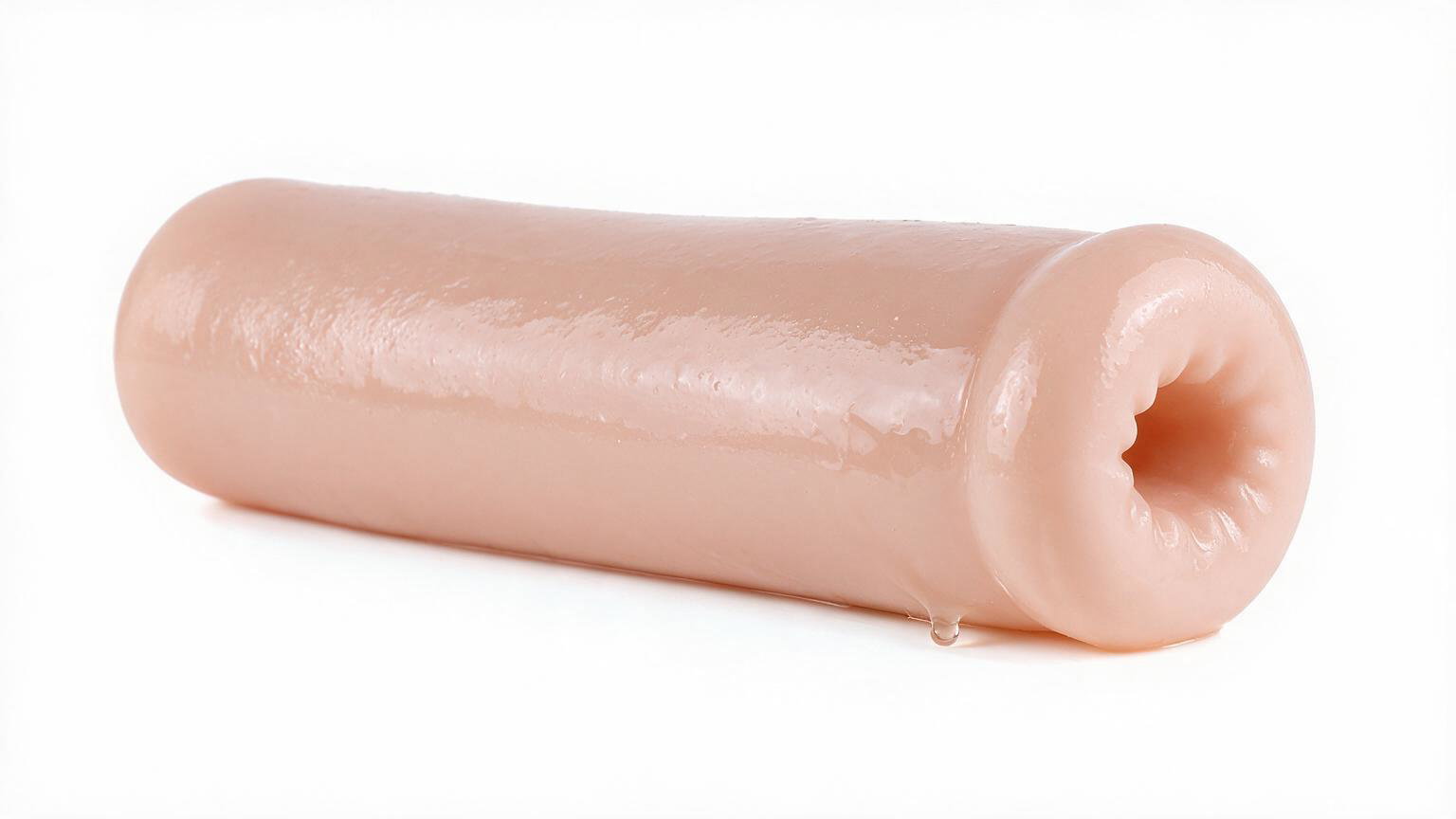
Example shown for illustration only.
What it looks like: A slick, oily film on the surface, an oil ring on whatever it was sitting on, or in bad cases a little puddle in the bottom of the storage bag.
The cause: This is plasticiser migration again, the same thing behind stickiness, just further along. Very soft sleeves do this more because they contain more oil. Heat makes it dramatically worse, and so does storage against hard plastic, which pulls the oil out through contact. A light film on a soft toy is normal. A puddle is not.
The fix: Wash, dry completely, powder heavily, and change where it lives. Room temperature or cooler, in a breathable fabric sack, not touching anything. Re-powder every time you clean it. A very soft toy will always weep a little, and powder is the maintenance, not a one-off fix.
When it's done: When it's leaking constantly despite powder, has visibly shrunk or shrivelled, or has gone stiff and greasy at the same time. That's a sleeve that's lost most of what made it soft. Retire it.
Quick Reference
| Symptom | Real cause | Fix | Retire when |
|---|---|---|---|
| Sticky surface | Oil migrating, no powder, heat | Wash, dry, powder, cool storage | Sticky again within a day |
| White bloom | Residue, oil loss, or mould | Rinse test first, then match the fix | Mould that comes back |
| Sour smell | Water left in the tunnel | Cleaner, drying stick, breathable bag | Survives two full cycles |
| Chemical smell | New-toy off-gassing or heat damage | Air it out (new) / nothing (heat) | Smell plus tackiness on an old toy |
| Discolouration | Sunlight, dye transfer | Dark storage in its own sack | Only if stiff or sticky too |
| Tears | Dry friction, rough drying, age | More lube, clean thoroughly | Tear reaches the outer wall |
| Oily weeping | Advanced oil migration, heat | Powder every clean, cool storage | Shrunken, stiff, and leaking |
The Rescue Kit
Notice how every fix on this page was some combination of the same four things? That's not laziness, that's the whole diagnosis. Moisture and storage cause almost everything, so the kit that prevents almost everything is small and costs less than one replacement sleeve.
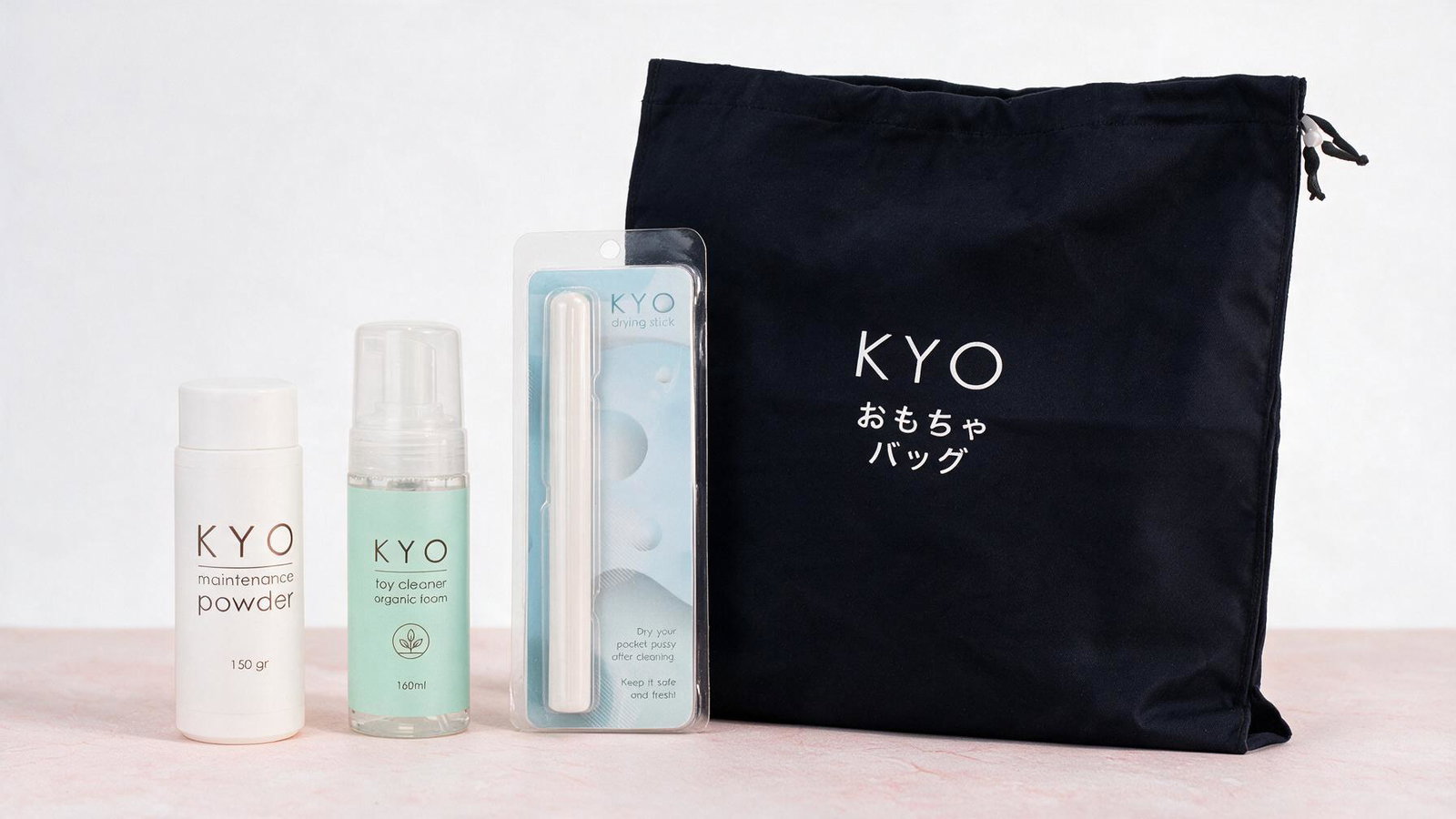
Products shown for illustrative purposes only. Sizes are not to exact scale.
- KYO Organic Foam Toy Cleaner, €11.95. Actually cleans the tunnel instead of just rinsing it, which is the difference between a sour smell and no smell.
- KYO Onahole Quick Drying Stick, €9.95. Pulls water out of the one place a towel can't reach. Solves Symptom 3 almost on its own.
- KYO Maintenance Powder, €15.49. Absorbs the surface oil that causes stickiness and weeping. One bottle lasts most people the better part of a year.
- KYO Toy Sack Big, €7.45. Breathable, opaque, and keeps the toy off plastic and away from anything it could steal colour from.
When to Let Go
Here's the honest part. A sleeve is a consumable. Even a perfectly cared-for one has a lifespan, and the signs above are how it tells you where it is on that curve. Recurring stickiness, a smell that won't leave, mould, a growing tear, or a toy that's shrunk and gone stiff all mean the same thing: the material is past what powder and cleaner can do.
Binning a toy you liked feels bad for about a day. Using one that's growing something feels worse for a lot longer. When in doubt, retire it and pick a fresh one from the onahole range, this time with the kit above sitting next to it from day one.
FAQ
Can I use cornflour instead of maintenance powder?+
In a pinch, yes. Cornflour absorbs oil fine. The catch is that it's food, so any moisture left in the toy turns it into a snack for bacteria, and it clumps. Purpose-made maintenance powder is finer, doesn't feed anything, and stays dry longer. Use cornflour this week, buy the real thing next week.
Will boiling water or alcohol sterilise a smelly toy?+
They'll sterilise it straight into the bin. Boiling water warps TPE and cooks the plasticiser out, and isopropyl alcohol strips the surface oils, which is the fast lane to a stiff, cracked, permanently tacky sleeve. A proper toy cleaner and a complete dry is the right answer, every time.
How long should a sleeve actually last?+
With real care (cleaner, full drying, powder, cool breathable storage), a mid-range sleeve typically holds up for a year or more of regular use. Stored wet in a hot drawer, the same sleeve can be finished in a couple of months. The symptoms in this guide are the difference between those two numbers.
Is a little bit of oil on the surface normal?+
Yes, especially on very soft sleeves. A faint slickness a few weeks after powdering is just the material doing what soft TPE does. Re-powder and move on. It's only a problem when it's pooling, when it comes with stickiness, or when the toy's changed shape.
Bottom Line
Your onahole isn't being dramatic. Every one of those symptoms is a specific message, and nearly all of them say the same two words: dry it, store it. Read the sign, match the fix, and be honest with yourself when a toy has crossed the line. Then keep the next one from ever getting there.
Shop the cleaning and care range
And if you want the prevention side of this story, our guide to building a three-zone drying station covers the setup that makes most of this page unnecessary.